
Content Summary
- RAM prices are rapidly increasing due to global memory shortages and a fundamental shift in the semiconductor market with major memory manufacturers (Samsung, Micron, SK Hynix) reporting limited supply, “no stock” warnings, and sharp DDR5 and NAND price increases.
- Artificial intelligence (AI) workloads are driving unprecedented demand for DRAM and high-bandwidth memory (HBM), reducing availability for business PCs and servers.
- PCs, servers, workstations, and SSDs are becoming more expensive, with higher hardware costs expected to continue.
- Small and mid-sized businesses face higher IT upgrade costs, making procurement planning and budget forecasting more critical than ever. Early hardware refresh planning can help reduce exposure to these rising prices and avoid last-minute purchasing at peak market rates.
- Complete IT helps businesses navigate memory price volatility by optimizing hardware configurations, forecasting costs, and extending equipment lifecycles when appropriate.
At Complete IT, we keep a close eye on hardware trends because even small shifts in the technology supply chain can have a big impact on budgeting, procurement planning, and upgrade strategies for our clients. Over the last several months, one trend has been impossible to ignore. RAM prices are climbing fast. Not slow and steady, but a sharp, aggressive surge unlike anything we have seen in years.
This isn’t a minor fluctuation. It’s a structural shift happening across the entire memory market. Whether you are buying a single workstation, refreshing an office full of PCs, or planning a server upgrade, the rising cost of RAM is becoming part of the conversation.
Why Are RAM Prices Increasing So Quickly?
The short answer is demand. But the long answer paints a bigger picture of how artificial intelligence, manufacturing priorities, and global supply constraints are reshaping the entire memory industry.
Illustrative DDR5 Consumer Price Movement
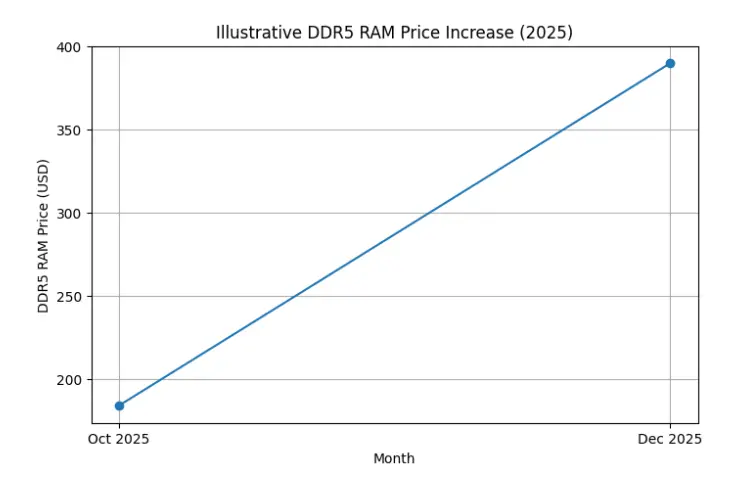
The chart above shows how a typical DDR5 32GB kit jumped from around $184 in October 2025 to nearly $390 by December 2025.
How AI Data Centers Are Driving Global RAM Shortages?
Artificial intelligence has created an unprecedented demand for high performance memory. Data centers are expanding rapidly and AI workloads require massive quantities of DRAM and specialized memory types like HBM. Manufacturers make more profit per wafer when producing memory for AI applications, so production capacity is shifting away from consumer grade RAM. That leaves traditional PC and business hardware markets fighting over what is left.
In other words, corporate AI demand is outbidding the rest of the world.
Supply Constraints Are Tightening the Market
Samsung, Micron, and SK Hynix control most of the global DRAM supply. All three have reported limited inventory and extremely high demand. Samsung recently raised DDR5 contract prices by almost 100 percent while warning partners of “no stock” conditions. Kingston and other manufacturers report similar shortages on NAND flash, with some cost increases exceeding 200 percent since early 2025.
These pressures have caused retail prices to spike in a matter of months.
Expect Higher PC and Server Prices
Manufacturers like Dell, HP, Lenovo, and Apple are already signaling cost increases tied directly to this memory shortage. Smartphones, workstations, servers, and even gaming systems are expected to become more expensive as RAM and NAND shortages continue. Some analysts believe the shortage may extend into next year before new fabrication plants catch up.
For small and mid sized businesses, this means planning ahead becomes more important than ever. If your organization is due for a hardware refresh in the next 12 to 18 months, it may be wise to review timelines and budget assumptions now rather than later.
Illustrative NAND Flash Price Index Shift
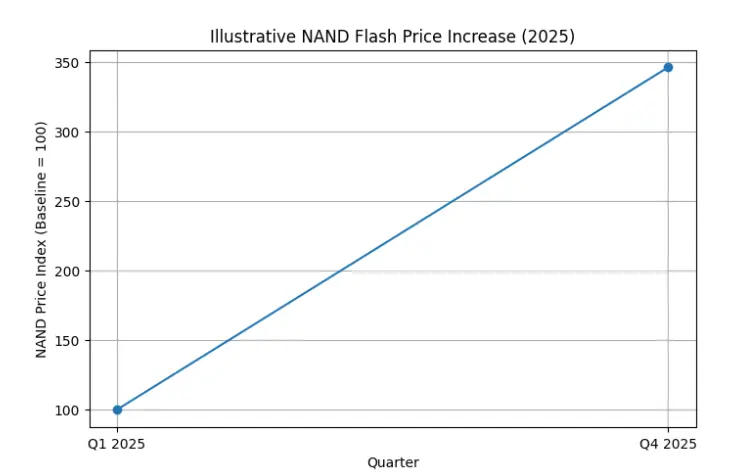
NAND flash, used in SSDs, has seen similar pressure. Prices have more than tripled since the beginning of the year.
What This Means for Small & Mid-Sized Businesses in Austin
Rising RAM and SSD prices are increasing the total cost of PCs, servers, and workstations for small and mid-sized businesses in Austin and Central Texas. As memory shortages continue throughout the year, hardware refresh projects are becoming more expensive and harder to schedule. Austin’s growing tech and AI economy is intensifying competition for limited hardware supply, leading to higher prices, longer lead times, and frequent backorders.
For Austin-area SMBs, delaying upgrades often results in paying more for the same equipment later, while continuing to run aging systems increases performance issues, downtime risk, and support costs. Businesses that plan early and adjust upgrade strategies are better positioned to control IT spending during volatile market conditions.
Key Impacts for Austin Small & Mid-Sized Businesses
- Higher hardware costs: RAM and SSD price increases are driving up the cost of business PCs, servers, and workstations.
- Longer procurement timelines: Memory shortages are causing backorders and delayed deliveries across major hardware vendors.
- Budget pressure: IT refresh projects planned for the coming year may exceed original budget assumptions.
- Operational risk: Aging systems increase the likelihood of performance problems, downtime, and higher support expenses.
- Planning advantage: Reviewing upgrade timelines early helps Austin businesses avoid peak pricing periods.
- Strategic alternatives: Extending equipment lifecycles or adjusting configurations can reduce exposure to rising memory costs.
How Complete IT Helps You Navigate These Shifts
As an Austin-based managed IT services provider, Complete IT helps Central Texas businesses plan hardware upgrades around volatile memory pricing. Planning is the key. We help clients forecast procurement costs, choose hardware configurations that offer the best value, and time their upgrades to avoid unnecessary spending. We can also help evaluate whether extending the life of existing equipment makes more sense than upgrading during peak pricing periods.
A little foresight goes a long way when the market is shifting:
- Cost forecasting: Analyze upcoming RAM and SSD price trends to build more accurate IT budgets and avoid surprise cost increases during hardware refresh cycles.
- Hardware timing strategies: Plan upgrades around market conditions, lead times, and pricing volatility to reduce exposure to peak memory costs and supply shortages.
- Lifecycle extensions: Evaluate whether extending the life of existing PCs, servers, or storage systems can deliver acceptable performance while prices remain elevated.
- Vendor negotiation support: Leverage vendor relationships and purchasing expertise to secure better availability, pricing, and configuration options during constrained supply periods.
A Few Takeaways to Keep in Mind
- RAM and SSD prices are rising quickly due to global supply shortages and AI driven demand.
- Costs may continue climbing until fabricators can catch up with demand.
- Businesses planning upgrades should review budgets and timelines now.
- Early hardware planning is especially critical for Austin SMBs.
- Complete IT can help you build a purchasing strategy that avoids unnecessary expense.
FAQ
Why are RAM prices rising so quickly?
RAM prices are increasing due to high demand from AI data centers, limited global supply, and manufacturers prioritizing high-margin memory for AI workloads over business and consumer systems.
How do rising RAM and SSD prices affect Austin businesses?
Small and mid-sized businesses in Austin and Central Texas face higher costs for PCs, servers, and workstations. Delays in upgrades can increase downtime, performance issues, and IT support expenses.
What can Austin SMBs do to manage rising hardware costs?
Businesses can forecast IT budgets, plan hardware timing strategically, extend equipment lifecycles where feasible, and work with vendors to negotiate better availability and pricing.
How long will the RAM shortage impact IT costs?
Analysts expect tight supply and elevated prices to continue through 2026, with some forecasts extending shortages into 2027–2028 until new memory fabrication plants increase production.
How can Complete IT help Austin businesses during this RAM shortage?
Complete IT assists Austin and Central Texas businesses by forecasting procurement costs, recommending optimal hardware configurations, timing upgrades to avoid peak pricing, and evaluating lifecycle extension strategies.
Are server upgrades more affected than desktops?
Yes. AI-driven demand for high-performance memory and HBM primarily impacts servers and workstations, but all business hardware, including desktops and SSD storage, is seeing price pressure.